

Why is the answer always more masculinity?
Clocking in for another shift at the gender discourse factory

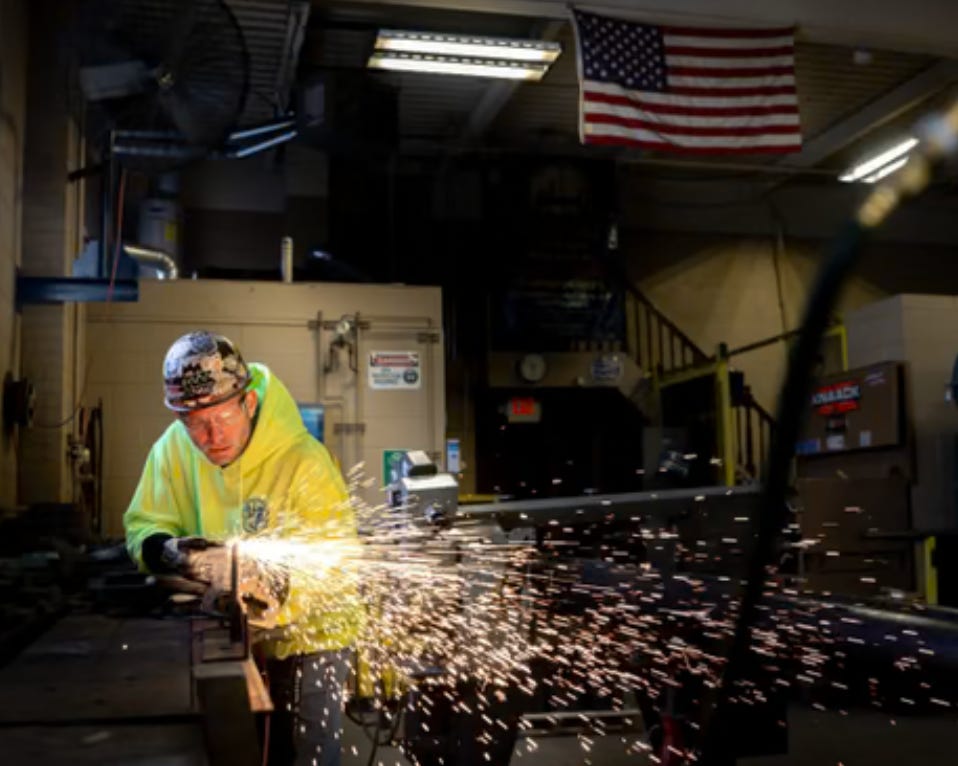
I don’t know, man. I’ve got nothing against the guy, but when I hear a Democratic candidate for Congress spouting off about how “there’s nothing wrong with being masculine,” and “Democrats have catered too much to, you know, the softer side” I can’t hold back. Whatever the current status of woke (is it legal again? or still dead?) lines like that are just begging for some heavy duty gender discourse.
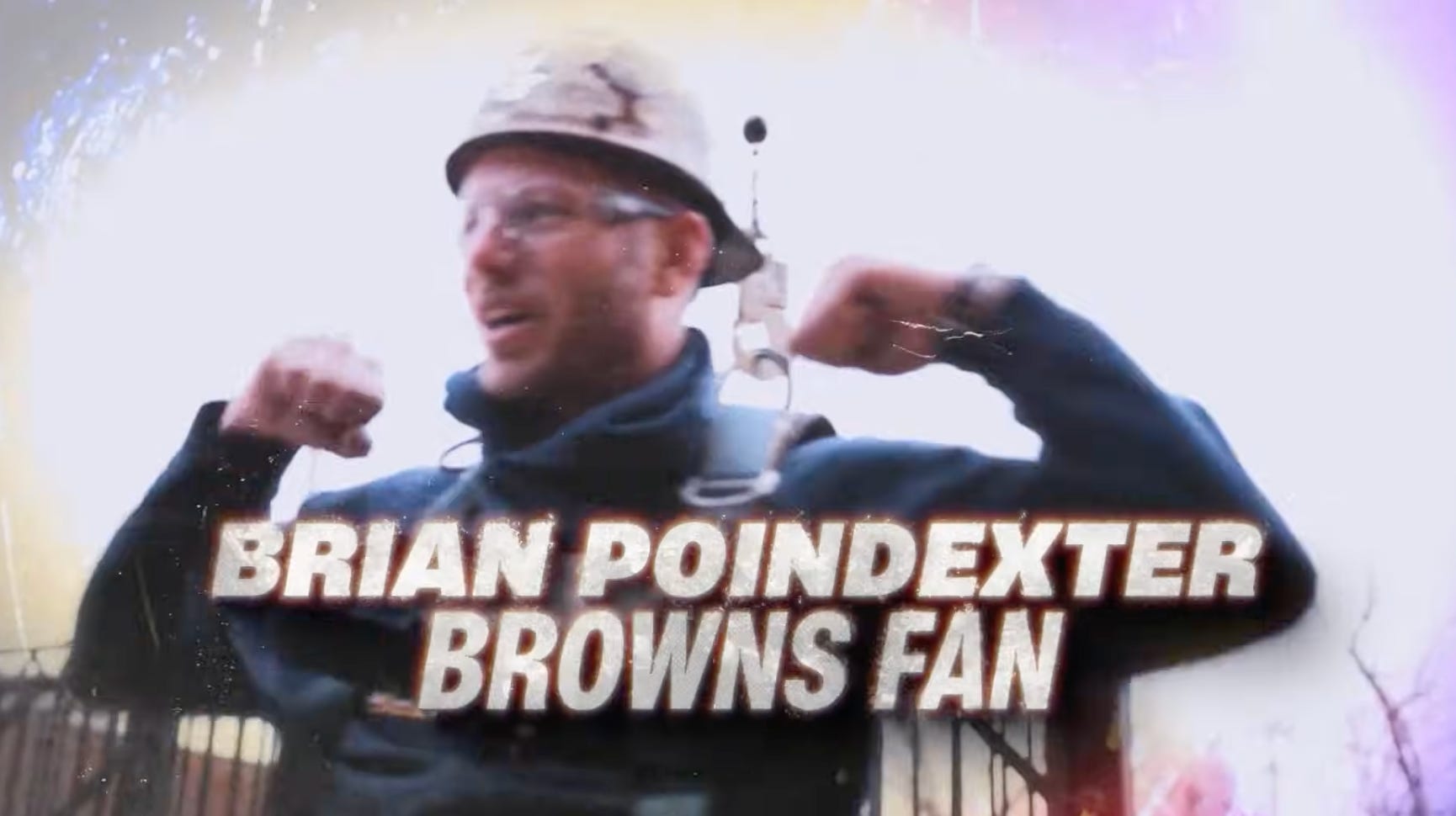
That quote, which somehow isn’t from Mark Zuckerberg or his recently jettisoned emotional support chain, comes courtesy of Brian Poindexter. And man, I wish he hadn’t said it, because I really am rooting for him. He’s an ironworker, a union guy, and all for taxing the rich. Hell yeah. I wish he were tougher on AI and bolder on Medicare for All, but I sincerely hope he wins his election. If I lived in Northeast Ohio, I’d knock doors for him.
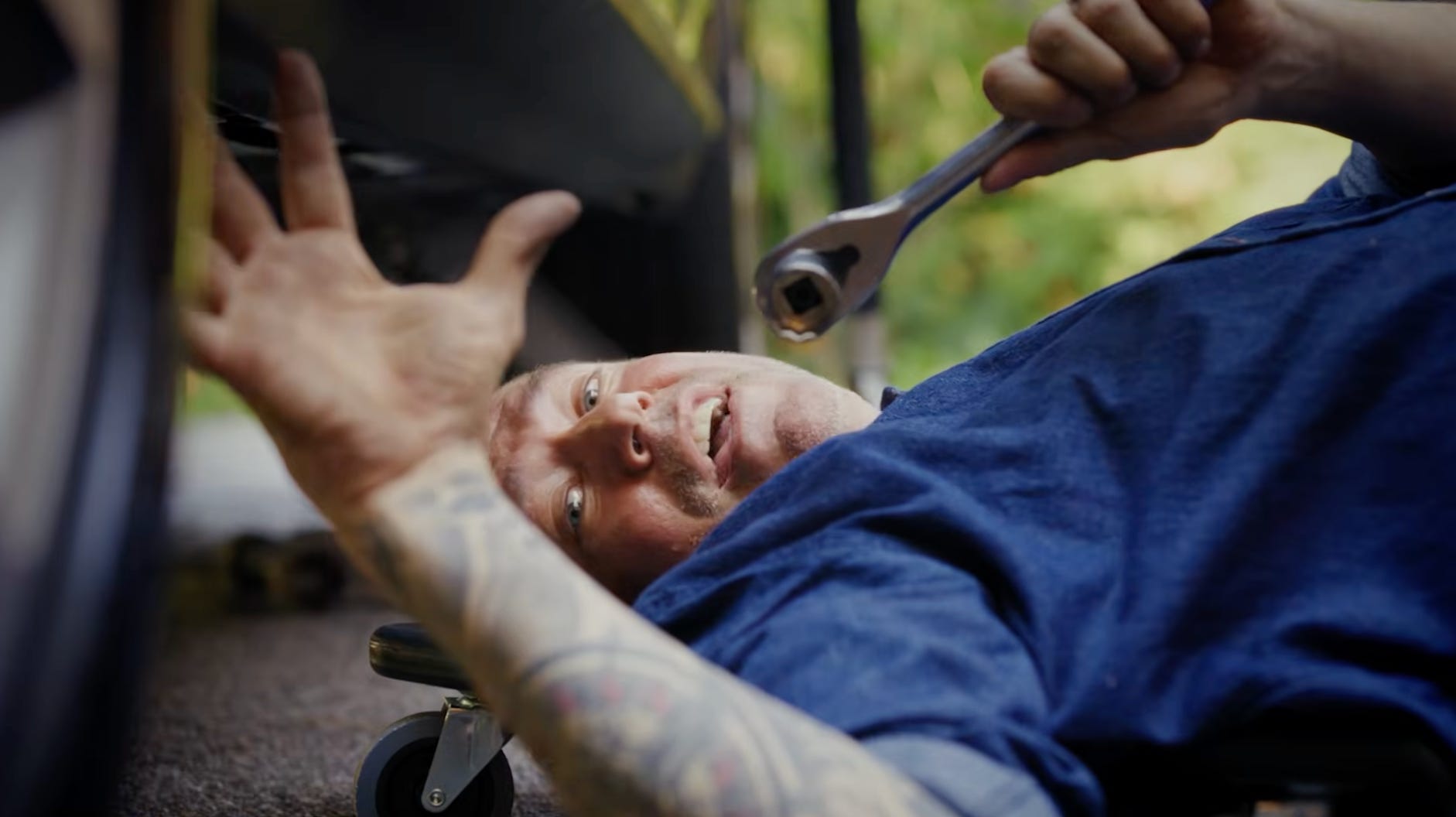
But I’ve been struggling, for a few months now, to make sense of this moment in masculinity politics. It reared up for me when Graham Platner’s star was still rising, back when every week it seemed like a new political dude emerged with a campaign video packed to the gills with the same tropey signifiers. Grease stains. Welding sparks. Truck commercial style narration. The message? Here come the men. Real men. Not sissified computer jockeys, but a real deal brotherhood of wrenches and sweat. Did they ever leave? They’re back in town, those boys. Spread the word around, and while you’re at it, check out their callouses.
There they are. Dan Osborn’s big Nebraskan working man paws, displayed for your appreciation.
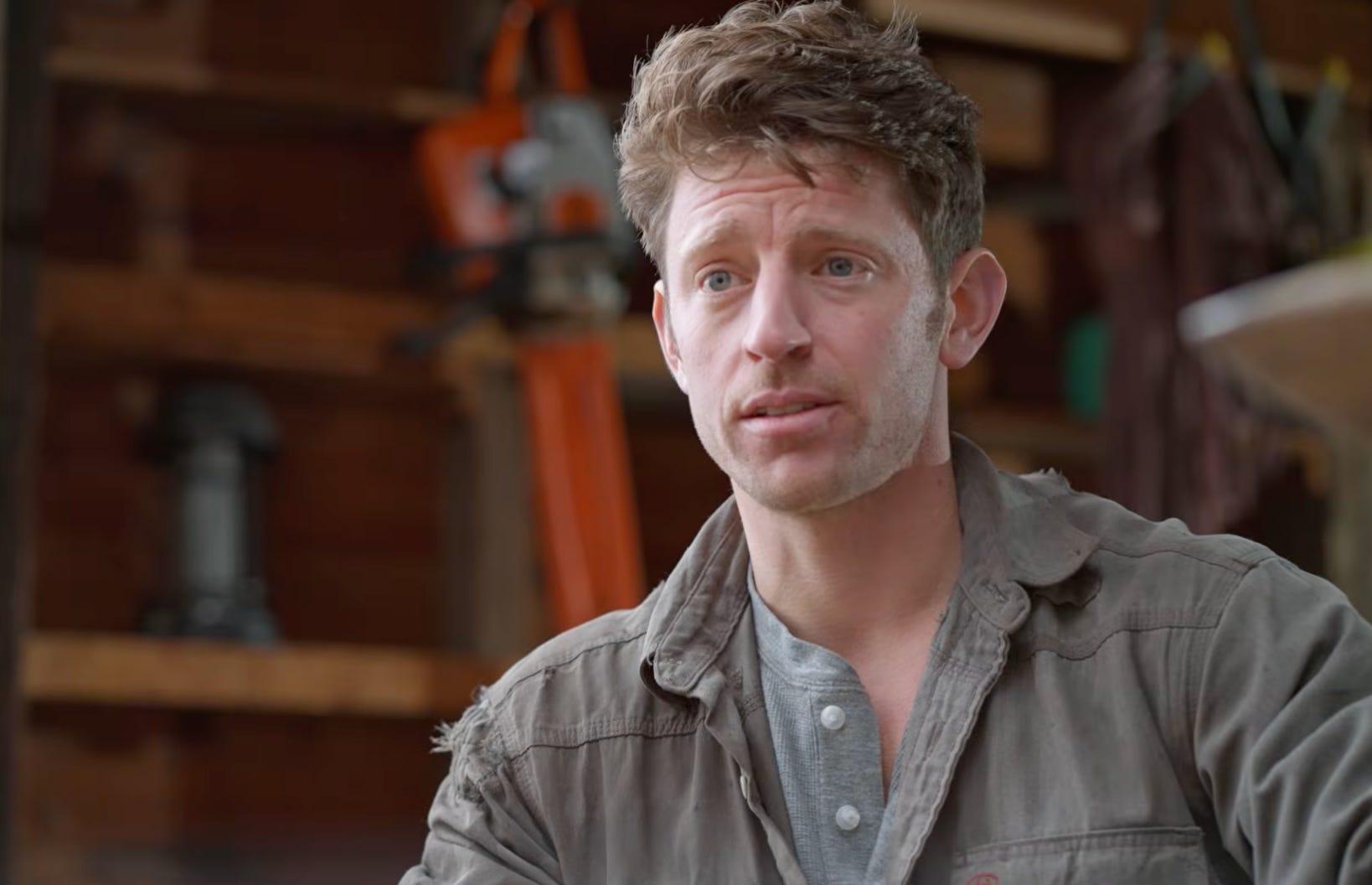
And there’s Sam Forstag’s jacket. Ripped up just so, presumably in the Montana wilderness.
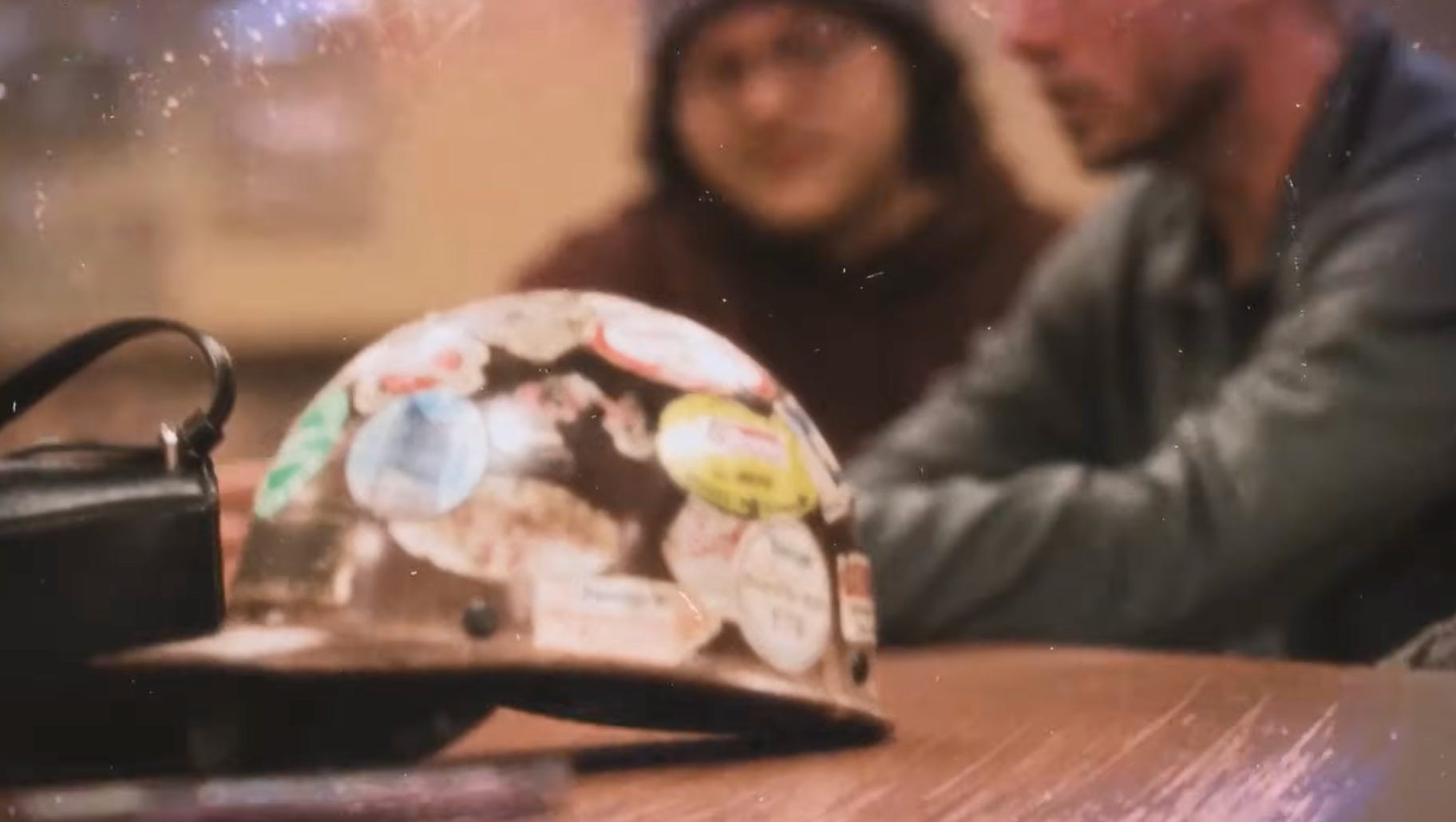
And Brian Poindexter’s masculinity-approved hard hat, stickered.
There’s plenty more where those came from. I haven’t talked about all the motorcycles. Or the fonts. Have you ever had a sans serif punch you in the face? Enjoy.
Again, I’m torn here. I have no reason to believe these fellas won’t be solid elected officials. When they talk about sticking it to billionaires, I’m pumping my fist so damn hard. And while some of these guys’ class story is a bit more complicated than the ad-ready narrative, they really worked those jobs. It’s not Sam Forstag’s fault that he looks not only like a smokejumper, but the star of a TV procedural about smokejumpers. These guys, as individuals, aren’t the enemy, nor are their supporters.
So why fret, nerd? Don’t you want to take the country back from the fat cats? Oh, no doubt. Let’s Internationale our way to victory in November.
But man, the pattern. Whenever times feel perilous, it’s always back to the white masculinity well. There’s a reason why The Atlantic spent a day with Brian Poindexter in Ohio rather than Kaela Berg in Minnesota (also a union leader, but one whose feminine-coded job as a flight attendant doesn’t lend itself to truck commercial narration). There’s a reason why restaurant vet Francesca Hong has to answer a million more electability questions than Graham Platner ever did, even when his flags started waving bright red. There’s a reason why Abdul El-Sayed and Zohran Mamdani (not working class, but very much male) have to deliberately soften rather than toughen their public image to gain acceptance.1 And there’s a reason why smokejumpin’ Forstag has a hundred thousand Instagram followers, a number larger than the most populous city in his district.
If the goal here was to build a mass working class movement, we’d see more analysis about how to stem the continued decline in union membership than billowy coverage of these guys’ voices and biceps. We’ve always been a country that loves working class narratives more than actual working class communities. We can admit, even if we support them, that these guys weren’t elevated just because they support passing the PRO Act. They’re beneficiaries of the only variety of identity politics that always escapes scrutiny: our veneration of self-described “manly men” valued (as long as they’re white) less for their actual experience on the societal margins, but the fact that they look the part.
As for the authenticity question, just because a story is rooted in truth doesn’t mean it’s not still a story. And just because somebody’s wearing their own clothes doesn’t mean that they’re not performing. That’s not an attack on those guys, mind you. It’s just the reality of how image-making works. I’ll give Forstag the benefit of the doubt that he came by those rips on his shirt honestly. But I’d also bet big money that my guy owns other shirts that aren’t ripped. Choices were made the day he cut his announcement video. Campaigning, like so many acts of public presentation, is an act of constricting a complicated human life to the shallowest possible dimensions.
There’s this line in one of Osborn’s ads I just can’t shake. It’s delivered off camera, by a female voice. “You’re an everyman,” in the same fawning cadence that the working women of Metropolis might coo, “thank you, Superman, you’re our only hope.”
There are a lot of ways to parse this, to analyze why this story, and for whom. The most generous answer is that these guys’ support is wholly noble and empathetic. Times are tough, politics are rigged, and who wouldn’t want a working class fighter who can relate to struggling constituents. And then there’s the eternal dream, pragmatic but quixotic, that the Democratic Party might discover its mythic white guy whisperers, men who by the force of their charisma and authentically worn-in hoodies can deliver Reagan Democrat/MAGA bros back to New Deal progressivism.
Both of those are in play, but I have a hunch there’s also more going on. The manly man has always been a load bearing archetype for our collective projections. No doubt, there are professional class guys with email jobs for whom a parasocial relationships with a welder offers both radical credibility and a salve for their own masculine insecurities.2 And for many women, as Rebecca Traister reflected in her exegesis of Platner’s base in Maine, it’s complicated. Culturally, the manly man (especially the white manly man) is sold as an object of veneration and desire and experienced, in practice, as a frequent source of disappointment and danger. Of course there’s a well-spring of hope when a new gruff guy is presented as one of the good ones.
There’s so much there: fears and dreams and the not insignificant fact that we’re figuring all this out as we go. We’ve never built a country that works for all of us, so we take what we can get, even if that’s just a bearded guy in a dusty jacket who seems to dislike the same politicians and CEOs that we do.
For a lot of us, the honest answer is likely some murky all of the above, a muddled mixture of empathy, pragmatism, projection and longing. And I get it. It feels good to hope.
Love the candidate you love, I suppose I’m saying. But be honest with yourself. Is this really the politics of our dreams? Or are we just falling for the same fantasy Joan Didion wrote about with John Wayne, longing for a cowboy who promises to build us a house by the bend in the river where the cottonwoods grow?
Speaking for myself, I still want these guys to win, but I just can’t shake the palpable hollowness of it all. I’ll always choose a Medicare For All welder than an “access and affordability” Mckinsey Consultant, but I’m still mourning roads not taken
Some of that ambivalence no doubt, comes from the long tail of the Platner campaign, and the further evidence we received that while not all stereotypical manly guys have a history of abuse, it’s never entirely surprising when we learn the darker story behind a camera-ready narrative. But what I’m feeling is more than just the fear that these other guys might have Platner-esque skeletons in the closet, or that they’ll pull a Fettermanian heal turn once in office.
I first started writing this essay after reading polling data across multiple states about how these manly guy political candidates don’t actually perform that well with other working class men. I followed that thread further, asking a handful of professional political experts in my network whether, across the past couple decades, stereotypical masculine candidates received more support from non-college educated men than other Democrats in the same cycle. The answer, with a couple key exceptions (Fetterman, now infamously, and also Jon Tester) was a definitive no. Like a lot of political conventional wisdom, the myth that working class white guys will only vote for carbon copies of themselves says more about the people selling the story than it does about the actual electorate.
I just can’t shake how tokenizing it feels, and how much we lose when we lean into it. It’s like we’re on an assembly line where everything is flattened to a pancake: the political careers of anybody but the same old white guys, our collective imagination as to who can be a “fighter” or a” “leader,” and who can’t, and our relationship to the kind of working class communities about which we claim to care.
The simple takeaway here is mere candidate diversification, to widen the swath of who we elevate as working class voices. And yes, I’d absolutely love for more Latina nursing assistants and Black janitors in Congress, but again, I fear the inevitable flattening. I don’t want to merely force a more diverse slate of candidates to run themselves through the tokenization machine, while movement work once again gets pushed to the back burner. I want us to think critically about how all these pieces fit together, about how we promote candidates more for their organizing ability than their ability to cut a viral ad, and about building the expectation that campaigns (as was the case with Mamdani’s, and is currently the case with Hong’s) seed long-term organizers in their communities rather than distract from their momentum with a single shiny object.
Lately, I’ve found myself thinking about the candidates themselves. How does it feel to repeat the same line about yourself, over and over. One that’s at least partially true, but that feels more artificial with every repetition. What’s it like to have that picture of you in Carhartts blasted every day in a thousand text messages, to see the money rolling in and wonder— do these people actually support me, or does it feel cathartic to toss some charity bucks to the cartoon working stiff?
When a day of campaigning is over, do they really feel like they’re building a working people’s movement? Or just hoping that a system that doesn’t really want to change will sneak them through as a token? Who’s to say. No time for that. Better to just to deepen your voice, roll up the sleeves, and turn on the camera again.
End notes:
My promise to you: I have no plans to run for office, which means I’ll never text you a picture of me in a chore jacket asking for help at the next finance deadline. I will, however, keep writing a newsletter that considers knotty topics with nuance and care, and will also keep training people to organize their communities, and will continue hosting 50 community gatherings in 50 states, and that does mean that I have a different ask: If you enjoy these essays, could you consider becoming a paid subscriber? Or, at the very least, sharing this piece with friends? That’s how we keep the lights on.
Speaking of the relay, because of a vacation at the end of June/beginning of July I’ve got a backlog of reports to write up (from a gorgeous discussion of patriotism in Nevada! and a trans movie club in Utah! and breakfast burrito mutual aid in New Mexico!) but also… we’ve got an event coming up in Tucson, tonight. Are you a woman, femme, non binary or trans person in Southern Arizona? Would you like to meet with the raddest dinner group around? I can’t guarantee that spots are still available, but if not you’ll still get connected to Tucson POWER and I promise you, you’re in for a treat because they rule.
Then, next Friday: Do you live in the Denver area? Do you love breakfast? So do the Denver Omelets, a social club devoted to a celebration of that city’s disappearing but iconic diner culture. Details and RSVP here.
July 31st is the deadline to apply to host in a bunch of states close to my heart (Minnesota, Wisconsin, Illinois, Indiana, Michigan, and Ohio). For reference, we’re imagining these events to take place most likely between October 10th and December 10th.
I’ve been off my game with songs of the week, but as somebody who grew up in the Mountain West, when I think about the eventual dead end of chasing that manly man dream at all costs, I think of Cowboy Dan, a “major player in the cowboy scene” who “goes to the desert fires a rifle at the sky and shouts ‘God if I have to die, you will have to die.’” To be clear, I’m not saying any of these candidates are down bad like Cowboy Dan, nor do I endorse Cowboy Dan for Senate.
To put a finer point on it, even if they were from working class backgrounds, it isn’t accidental that those two men face a very different burden of proof as Muslim candidates than their white counterparts. There’s an obvious reason why El-Sayed has to assure you that he has cute grandparents named John and Judy whom he loves very much.
The most extreme versions of this recently were the caustic white collar Platner boosters who loved calling their opponents “smoothgroined” “HR ladies” which, you know, didn’t necessarily help the accusations that their brand of politics might have a misogyny problem.
I have thoughts on this topic. As someone who has had a lot of interaction with union and working class spaces and people for a long time, I can say quite confidently that unions slid to the right a long time ago. The working class has been sitting solidly in the right for a long time. Most of the working class, if not MAGA, is at least MAGA adjacent. Lifting up these “working class union men,” who are really just white boys is just more of the centrist pandering. They are not on the left. Not by any stretch of the imagination. They know how to be anti billionaire but they aren’t actually for the people. They are misogynist, white supremacists and I don’t trust any of them. These are not men who have EVER had to examine their privilege. They will not be good for us. They have been pushed by more of the consultants like the ones in Maine. People who have never been working class or leftist and think they know how to appeal to that class of people. These consultants are centrist at best and they are finding candidates who look the part, trying to fool leftists into accepting them into the ranks while also trying to appeal to MAGA-adjacent or MAGA-disillusioned men. Why are we doing that? Welcoming and catering to those men has been the downfall of every step of progress we’ve ever tried to make. We don’t need more white men in office. Them being working class coded and thus “not elites” doesn’t make them automatically good. John Fetterman and Graham Platner are not anomalies. They are par for the course. Both of them ended up exactly how I expected when I first heard about them. But what choice was there? We deserve more than a choice between verified MAGA republicans and white boy “every men” masquerading as progressive working class people. (Mostly because “progressive” and “working class” no longer go together in a sentence, especially if that “progressive working class” person is white… that’s a unicorn.) We need to stop operating as if the working class who fought the coal barons in the 1930s still exists. Reagan politics changed the landscape in ways I think people are still refusing to fully see and until we do see it and respond accordingly, then we are going to keep ending up with these Platner style red flagged men who turn on us Fetterman style in office.
I was as happy as the next woman with sexual assault history to see Platner step aside. And it also made me sad, not because of any particular nostalgia for the image of the white working man (I call it nostalgia, because the working class has been majority Black, Brown, and female for a long, long time.), but because his campaign was actually doing good organizing work, especially compared to other Dems (both progressive and not) in Maine. Platner was the only one who was actually going into communities of color across the state, talking and listening, building relationships. Those can be true at the same time in the same way that whoever replaces him may be less problematic in their background and not at all connected in marginalized communities, nor inclined to be so.
There's a lot of discourse about how the Right is trying to stave off the reality that we will be a majority Black and Brown country in short order, but the Left is similarly occupied. They just do it by consistently looking for their white male working class savior. I try to be hopeful that slowly but surely we will make the transition to reflecting the reality of our population in our national political leadership, but honestly I expect as long as the political strategists are still largely rich, white, and male on both sides of the aisle, we'll keep rehashing this nostalgia to the detriment of everyone.