

The real electability is the friends we make along the way
What the entire country can learn from Francesca Hong's campaign for Governor of Wisconsin

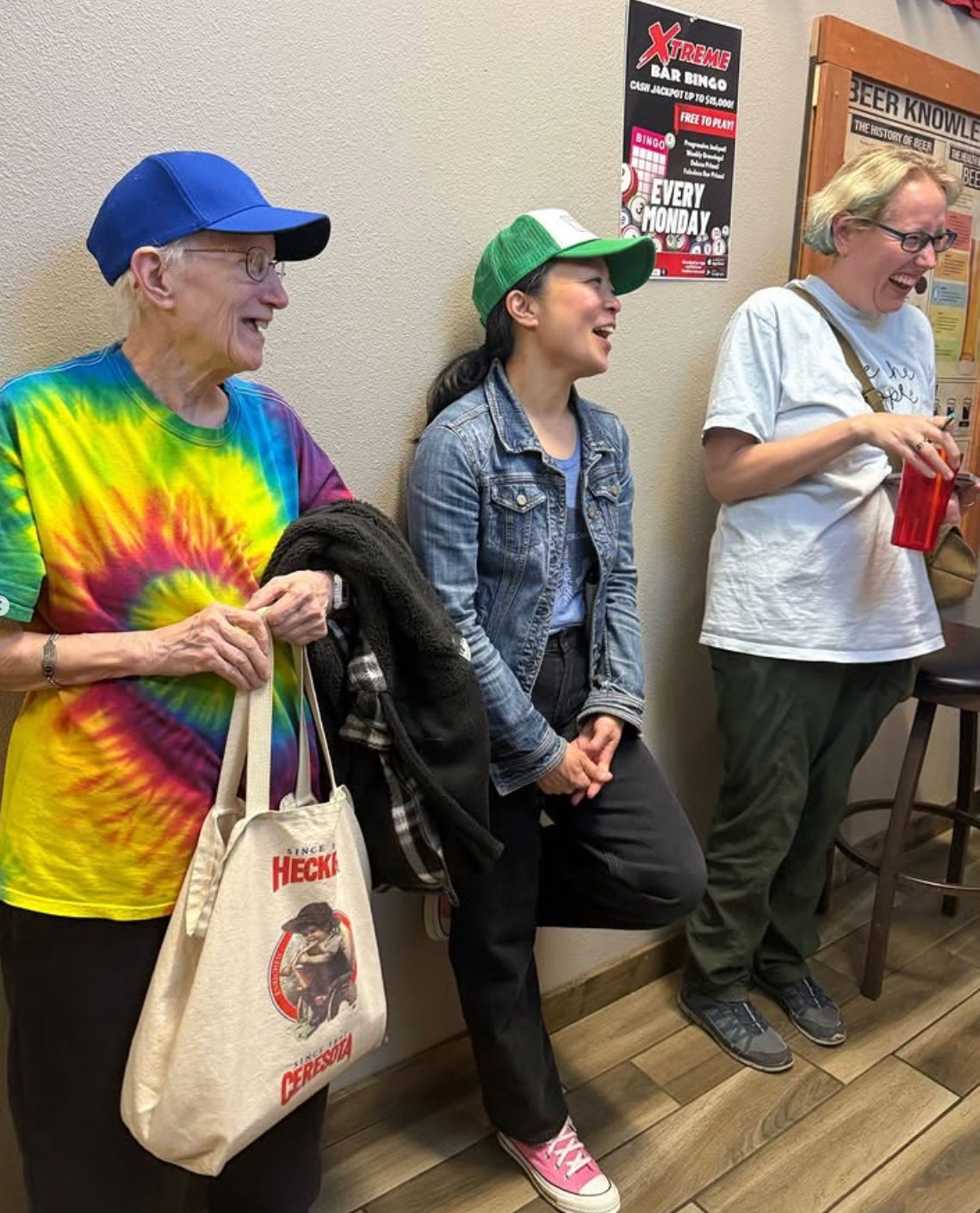
I bet that you’ve heard this story before.
My state is currently in the midst of a high stakes gubernatorial election. We’ve had a Democratic governor for a couple terms now, but Republicans have held both legislative houses (thanks, gerrymandering), so functionally that’s been a wash. But now, we’ve got new maps, and a fairly decent progressive winning streak in state-wide elections, so there is rising optimism that, if we play our cards right, we could have a Democratic trifecta this November. And man, do we need it. Our municipalities and schools are broke (in spite of a statewide surplus), life has gotten harder for working class Wisconsinites across just about every metric, and it’s been nearly two decades since we’ve been able to dream of our government doing wonderful things that might help us.
Now, it’s not guaranteed, of course, that Democrats in Madison will pursue beautiful and decent policies, but at least there’s a chance. And if the past sixteen years of state history is a guide, if Republicans win some combination of the governorship and the legislature, we’ll stay stuck in our current morass. The stakes feel tremendously high, and also fairly scary.
Because our current governor is term-limited, there are roughly a million candidates running for the Democratic nomination. But up to this point, only one of them has truly lit a grassroots spark in advance of the August primary: Francesca Hong, a State Representative, restaurant industry veteran, community organizer, and single mom from Madison. Not only has Hong consistently led the field in multiple polls, but she’s successfully mobilized thousands of volunteers and routinely packs rooms across the state. Organizers and political veterans across Wisconsin— not just in traditional liberal strongholds— share that she’s the only Democratic candidate who has fired up their neighbors.
If conventional political wisdom is to be believed, Hong shouldn’t be in this position: She’s a relatively young Asian American woman, a proud and vocal democratic socialist, and, previous to the campaign, wasn’t one of the biggest names running. She has no mega donors or Democratic bigwigs propping her up. In an era of anti-woke reactionary backlash, she doesn’t apologize for consistently sounding authentically leftist in public. But rather than welcoming her ascent and trying to learn from what the crowds see and hear in Hong, her campaign has instead been dogged by a predictable question.
“But is she electable?”
I know this is how the game is played, but also: what a bizarrely cynical point of political obsession. It purports to be objective, but is in practice mostly just vibes and projections stuffed into a trench coat. Even seasoned politicos admit, when pressed, that they don’t really know what makes somebody electable. Electability isn’t a science. It’s staring at a Rorschach test and then announcing your thoughts on the ink blot loudly, in the general direction of Ezra Klein’s microphone.
Usually, when we talk about a candidate being “unelectable,” we imagine a secondary group of people who we fear will reject that candidate along some combination of ideological, gender or racial lines. In Hong’s case, I’ve heard frequently, from putative allies, that “Wisconsin isn’t New York City.” That’s more efficient, I guess, then saying “I have a caricature in my mind of a backwards rural Wisconsin hick, and that person hates women and/or people of color and/or socialists, so regardless of how I feel personally, I have to calibrate my own vote down to that imagined lowest common denominator.”
I’m being dismissive, so let’s pause and acknowledge the nuance here. Racism, sexism and classism are real forces in every aspect of American life, especially our electoral politics. Wealthy white male candidates are absolutely held to a lower level of scrutiny than women and candidates of color. And of course there are huge barriers to running anywhere in America as a socialist— corporations and rich people have never gone quietly into the electoral night when their power and influence is threatened. If Francesca Hong wins the primary, the Republican general election campaign will no doubt hit world record levels of cravenness. It takes talented candidates and incredibly well-run campaigns to overcome those structural challenges. There’s a reason why voting is more often an exercise in harm reduction rather than wish fulfillment.
It’s also worth acknowledging that there are decent, good faith ways to rigorously consider a candidate’s potential electability , especially in the context of their broader vision, theory of politics, and overall strengths and weaknesses. Dan Shafer ‘s recent profile of Hong threads that needle quite skillfully, and is well worth your time.
But even with all that granted, more often than not the “electability “debate is such a reductive way to think about politics. For one, it relies on a static, condescending analysis of our political neighbors. It assumes that the entire electorate is set in stone— that rural voters will always choose the rich white MAGA guy who pretends to be an aw-shucks Northwoods dad over the hip Asian lady who drops f-bombs in her calls to tax billionaires. Now, of course there are plenty of voters with rigid, unmovable ideologies, but a wide swath of the electorate is far more politically confounding than we assume— in Wisconsin, the same electorate repeatedly votes for the same two incumbent Senators— Tammy Baldwin, a staunchly progressive lesbian from Madison, and Ron Johnson, a literal far right conspiracy theorist)1.
But this fixed mindset isn’t just inaccurate it’s also just an immense bummer. To believe in an unchangeable electorate is to divorce politics both from organizing and from joy. Rather than directing our energy towards building the political reality of our dreams, we pre-accept existing conditions as a given. In doing so, we voluntarily give up both our collective power and imagination.
The electability debate is, more frequently than not, a self-fulfilling prophesy. There’s a significant enough body of research on the deleterious effects of this electability obsession, particularly for female candidates, that social scientists even have a term for it— pragmatism bias. Rather than considering what candidates authentically excite us and then asking what kind of organizing and resourcing would be necessary to help them succeed, we pundit ourselves to death. We proactively write off entire communities, turn a blind eye when campaigns don’t contest those supposedly hopeless geographies, and then wait around for another election cycle to have the same point proven again.
Lest this sound like a one-side rant imploring you to blindly support every upstart campaign that is deemed “unelectable,” let me make clarify. The Democratic Party is one of the largest, most unruly tents in world politics, and I don’t expect everybody who generally votes blue to agree with my preferred choice. To return to the Wisconsin gubernatorial election, there are a number of passionate, experienced candidates running in the current primary. Personally, supporting Francesca Hong has filled me with joy and hope, but I can respect those who love different candidates. All I ask of my neighbors is that they spend their energy making the case for their preferred would-be governor, rather than opining about how Wisconsinites are too racist, sexist or easily swayed by anti-defund-the-police attack ads to vote for Hong. Don’t waste your wild and precious life prognosticating. If you’ve chosen your fighter, hype them up.
But if I’m really being honest, I’ve also frequently been turned-off by the way that supporters of “unelectable” candidates contribute to this discursive morass. Yes, it’s an unfair label, and yes there have been real examples in the past few years of party bigwigs using it as one cudgel in an array of dirty tricks against upstart campaigns. But when fans of upstart campaigns devote a significant portion of our emotional and material effort litigating that fight (particularly in online spaces with a gravitational pull towards caustic self-righteousness), we too miss an opportunity to build irresistible political movements.
Instead of focusing on other voters— their needs, their fears, their desire both for different material conditions and for community and belonging— we often spend too much time defensively arguing against “moderates” or “pragmatists” or “party insiders.” That feels righteous and cathartic, I suppose, but it centers the emotions of the already converted rather than our neighbors who are truly unheard. That too isn’t organizing. It’s navel gazing.
To return to Francesca Hong, one reason why I’ve been personally irked by the “Wisconsin isn’t New York” argument is that, while Hong is not trying to just run a carbon copy of Zohran’s mayoral campaign, the two share similar strengths (both of which come from their background as organizers who genuinely delight in other people). Lots of candidates claim that their campaigns aren’t just about themselves, but few actually live it in practice. The reason why Mamdani 2025 felt so magnetic wasn’t just because he is a skilled political communicator, but because he taught his supporters to use his campaign as a way to connect more deeply with their neighbors. He repeatedly threw the best party in New York City, over the course of multiple months.
Hong’s campaign has been just as infectious. Yes, she can fire up a rally, and can listen thoughtfully at a round table, but she’s just as likely to ask her volunteers to join her for an event as she is to encourage them to strengthen their bonds with each other— at dance parties and potlucks and on warm and vibrant online discussion boards. This week, I’ve been invited both to join Hong herself for a canvassing event and to attend a volunteer-organized cheese swap at a beloved neighborhood haunt. In this way and this way alone, the skeptics are right. When it comes to willingness to show up at a corner bar and eat strangers’ cheese, we truly are built different.
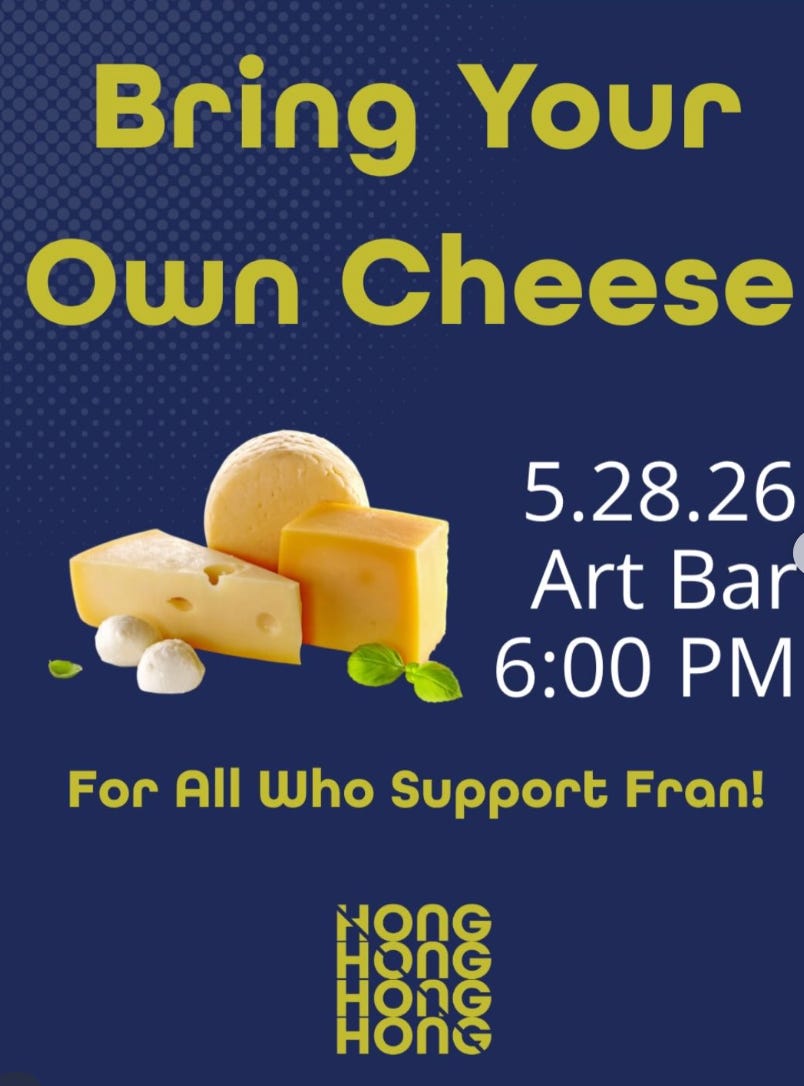
The common thread in both the Mamdani and Hong campaigns is a shrewd sidestepping of the whole conversation of electability. Rather than engage in endless circular debates, both campaigns focus simultaneously on making the experience of being a supporter as fun and hope-giving as possible, while also constantly working to earn the trust of those who aren’t already converted.2
What stands out most, in that aforementioned profile of Hong by Dan Shafer, is how little she feels naturally entitled to anybody’s votes. She’s not scolding anybody for not knowing the full history of Wisconsin’s support for socialists. Instead she talks about humility, about how her experience working in restaurants taught her to care for everybody who crosses her path, and doesn’t blame anybody for not previously supporting her or any other left-liberal candidate. In her own words, “you can’t have a party feel like a special club… in politics, your job with voters is to make them feel special. And I think [up to this point, the Democratic Party] has only made a certain group of voters feel special.”
Yes, Francesca Hong has taken to occasionally wearing a shirt with “unelectable” printed in an all-caps sans serif (a good joke!). But she’s clearly not interested in pedantry. She believes that what matters isn’t whether or not you’re skeptical that a Madison leftist can win in a purple state, it’s how she and her campaign makes you feel. She believes that if you’re feeling screwed by forces beyond your control, that you deserve a governor that tries to flip some of those tables for you. She believes that if you’re feeling lonely, you deserve a neighbor who is as interested in getting to know you as they are in whether they can label you as a “supporter” on a spreadsheet.
I’m lucky right now. I currently have at least one candidate running for an election that matters to me who makes politics fell like something other than a bottom-feeding miasma of hopelessness. I know that’s damn well not the case for all of us right now. Too often, American politics is an exercise in accepting less— not just in terms of what candidates are offering, but when it comes to our role and how we, alongside our neighbors, can actually bend moral arcs together.
And while you deserve candidates (and political parties) who make it easier for you to both feel and build hope, there’s also a piece of this that is on us. When offered the choice between one more iteration of a tired debate or a chance to organize for something (or somebody) who legitimately fills your heart and soul, always choose the latter. Make your case, do your best, but don’t accept anything less than your dreams pre-emptively. I can’t guarantee that you’ll win every election. I don’t know what makes an electable candidate any more than anybody else does. But what I can promise you is this: you’ll never regret building. You’ll never regret connecting. You’ll never regret being surprised by your neighbors.
End notes:
I should probably disclose: I’ve been a Fran fan for a while now, ever since I watched her spend a significant percentage of her time as a safe seat legislator stumping for progressive women candidates in rural Wisconsin. The two of us are on a texting/DM basis, and also collaborated on an organizing zine last year. So yes, I’m very biased, but I do think this is a very special campaign and candidate and, wherever you live, this is one candidate worth both your attention and (if you’re able) your support.
Electoral campaigns are one way we build community, but far from the only place worthy of our attention. For example… perhaps you would like to learn more about a fifty state relay of community gatherings? You know, perhaps one that you can be a part of yourself (and even get a stipend for hosting)? And perhaps one that has a (very easy) application deadline coming up on Sunday June 1st, for hosts in MT, WY, ND, SD, and NE? Whoa, sounds pretty cool.
Famously, the Mamdani campaign consulted with the renowned gathering and community building expert Priya Parker on their campaign. Why do I bring this tidbit up now? Because I’ll be joining Priya for one of her Group Life Livestreams (here on Substack) on June 8th at 11:00 AM Central Time/Noon Eastern Time. Should be fun! We’ll be talking about the Interdependence Relay.
I hope you got something useful out of this essay. If that was the case, please consider chipping to support The White Pages. I know that this is a time when many our stretched their, and where there are a lot of asks on your plate, so I wouldn’t ask if it didn’t truly make a massive difference. Every new subscription supports not only this newsletter but all of my organizing and community building work as well. Plus, there’s free merch! And the coolest online discussion space around. Pretty neat, huh? Thanks for considering.
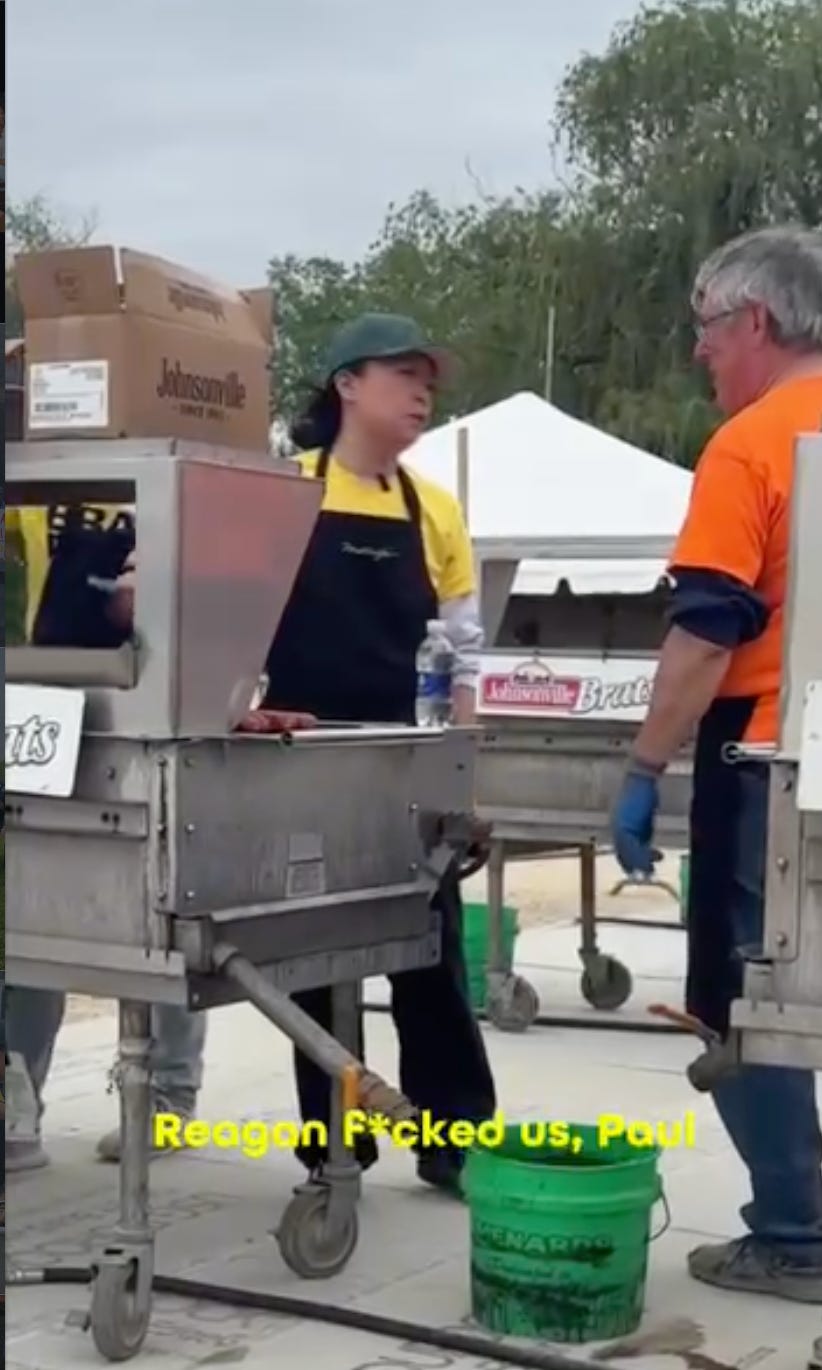
Finally, very good Francesca Hong screenshot here (from this video, taken at the Wisconsin Brat Fest). Paul, we love you.
It’s also worth noting, given all the talk about how, unlike New York, “Wisconsin” would never elect a democratic socialist, the Badger State of course has a long and proud tradition of electing socialists, all the way into the latter half of the twentieth century, and (to the point of voters being confounding and self-contradictory), the state was simultaneously electing Milwaukee Sewer Socialists at the same time that it was also electing Joe McCarthy to Congress.
Notably, this is an equation that previous generations of American socialists (especially here in Wisconsin) particularly excelled at, as this terrific Eric Blanc essay points out.
Do I wear my Liz Warren “She’s electable if you fucking vote for her” shirt still? I do. Where is the lie.
In all my years/decades working with city and state level campaigns, when I focus on the huge percentage of non-voters, it comes down to not feeling seen, heard or hopeful. There's a lot of resentment of candidates who only show up at election time. It seems to come down to:
Do you know me?
Do you really care about me and my needs?
Do I know you?
We have a State rep who keeps getting elected as a Dem in a very Red district. She's at neighborhood events all through the year, shows up for constituents' highs and lows, writes sensitive newsletters quarterly both about local concerns AND about what she's accomplished for them that quarter. Some of that can only come after winning that first election, but much of it is what won the first one. It takes a great staff and long hours, but it matters.