

You too deserve to have your quirky obsession celebrated by an adoring (and only partially understanding) public
The Olympics, and other gatherings

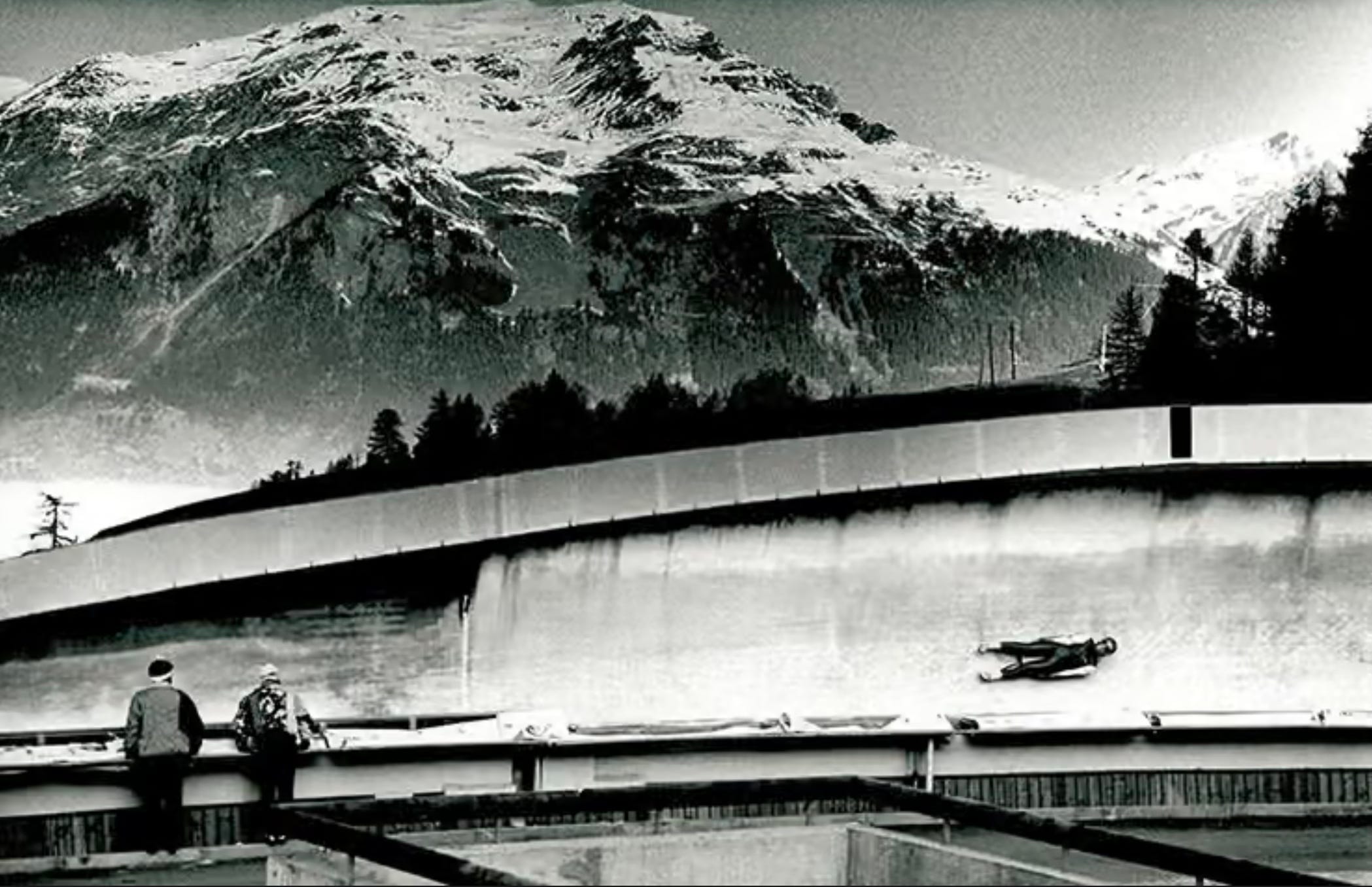
The Olympics, like most legacy institutions, are both beautiful at their core and complicated messes in execution. To love the Olympics, as I do, is to make an uneasy peace with a mountain of greed, corruption, arena-shaped white elephant projects and a metric ton of unsavory dudes shaking hands with each other. That’s even before you add in the whole nationalism element, especially tricky for those of us who live in, ahem, certain countries these days. Take the opening ceremonies. A glorious celebration of Italian oddness, but with occasional cutaways to J.D. Vance.
Again, none of that is unique to this particular imperfect enterprise. Basically everything I adore and/or rely on to make a living in 2026 is an exercise in uneasy moral compromise. The Olympic are a sordid, grift-soaked mess. And also, what a concept. It is amazing that they exist, but even more amazing that we give them the attention that we do.
Think about it. We watch the Olympics, apparently in record numbers, in spite of having virtually no clue what’s going on. Maybe that’s not the case for the summer games, when at least some of the events are rooted in acts that normal people might conceivably do from time to time. But what are the Winter Olympics, truly? Just an absolute pageant of chilly weirdos throwing their bodies up, over and especially down various sheets of ice and snow.
That is a hack “what’s the deal with airplane food?” level observation, I know. But it doesn’t make it any less true. I am a white American who has lived almost exclusively in our country’s frozen environs. If any lay person should be able to make sense of the Olympic events, it’s me. I’ve actually curled! I have tried both varieties of cross country skiing (poorly, but still)! My family regularly goes ice skating at the same place the U.S. Olympic speed skating team trains! And you need to believe me when I tell you this: every single event I watch, I’m faking it. What is a triple axel, like really? Why isn’t it a penalty when the speedy downhillers hit those flags? How many times does Russia have to invade your Northern European country before your populace gets that skilled at skiing with guns strapped to their backs? What makes one pair of dudes lying on top of each other better than other piled-upon dudes at traversing the icy death ramp on a sled? Beats me.
I don’t actually get any of it. You probably don’t either. And I realize that it may sound insulting to call these niche pursuits hobbies, because these are literal world class athletes. But I will use that term, not as an insult, but as a point of connection. Every four years, we stop what we’re doing and willfully hand our emotions over to other people’s hobbies. We cheer and groan and go through the whole cycle of “thrill of victory/agony of defeat” melodrama for lycra-clad strangers. Not because their specific obsessive pursuit is relatable in any way whatsoever, but because we trust that they are doing something they earnestly love.
That’s truly the only connection point here. Yes, some of the athletes are representing our country, but that only gets you so far. If we’re told that a Kazakhstani ski jumper has been dreaming of this day ever since she was a little girl, we get it. We don’t need to be versed in the micro-politics of the Almaty winter sports community. We definitely don’t have to understand the not-at-all-relatable instinct that causes her to gaze down from the peak of a frighteningly tall mountain and think, “you know what I, a human being with a theoretically healthy survival instinct, would like to do? Ski down that mountain for a while, then hit a really big ramp and hurtle myself into the literal sky at the velocity of a late model Volvo.” We understand that this moment is meaningful to her, and so, for at least a few minutes, it matters to us as well.
I love this so much for us. I love that it proves, once again, that though we are stuck in systems that frequently bring out our worse, we are still hard wired to root for each other. We’re such saps, us human beings. Such mushy, fist pumping, “shhhh, be quiet, the Norwegian curling team has the hammer and I need to see if they can pull it off,’ goofballs. We are suckers for underdogs. We are suckers for tear-filled celebrations. We are suckers for that moment when the silver and bronze medalist jump up and down and hug whomever got gold, and we realize that of course they’re friends, these talented snow weirdos.
We are drawn to celebrate one another, because we too crave being celebrated. When we hear that an ice dancer fell in love with the sport when he was four, we are reminded that there are things that we have loved for as long as we can remember. I may not be an Olympic-caliber anything, but there are so many interests and proclivities that are core to who I am. I don’t need the entire world to pause every four years and watch me write an essay about lessons from the 19th Century Danish cooperative movement, but it’s still nice to be seen and appreciated occasionally.
“You can love completely without complete understanding,” that’s a Norman Mclean quote, another Montana ex-pat who lived most of his life in the upper Midwest. An apt observation for this essay, but one that probably means more to me than it does to you. That’s ok. What matters is that you gave me the time and space to share it with you.
Back to the Olympics. They’re pretty great, but that doesn’t make them less of a complicated mess. Wouldn’t it be wonderful if we could acknowledge and celebrate each other without the jingoism and the corruption? Wouldn’t it be great if we could share and receive attentional gifts without leaving a new municipality reeling from debt and displacement every four years? And shouldn’t our smaller celebrations be at least a bit more reparational than the big spectacles, conscious of who is and isn’t typically given the benefit of being seen?
We can, is the thing. The opportunity is right in front of our face, literally all the time. Virtually every question I’ve ever gotten about community or gathering has the same answer. “What kind of gathering should I offer?” “What if nobody shows up?” “What if we’re one year in, and then people stop showing up?” “People have been showing up, but can I ask them to pull more of the weight?”
Make a space that celebrates.
The first time we come to a new space, it’s to satisfy an immediate feeling. We’re afraid, or alone, or curious. We keep showing up, however, when we feel seen, when the space feels curious about us. Eventually, we might get more involved, but only if we trust that the space will appreciate our collective effort, that we can imagine our gifts and interests and energy not falling into a void.
We’re currently in a moment when more and more people are talking about caring for each other as neighbors. Mutual aid has replaced fundraiser as the nom de giving in progressive circles. But truth be told, most of us are still building those muscles, and in the majority of cases, “mutual aid” is merely one more cool title to put on your Gofundme. There is no true mutual aid without mutual knowledge of each other. A group of people that’s only bonded in their enmity for fascism isn’t really a community; it’s just a grumpier mailing list.
So given that dynamic, here’s a free idea for your next potluck, or for the first time you get your block together for a neighborhood bash, or a way to reinvigorate an activist group that doesn’t know what to do now that they already made whistle kits. Host a “what everybody’s best at,” party. Like the Olympics, except you don’t have to rent a mountain or build a luge track. There are already popular versions of this floating around (a brewery in my neighborhood does a “three minute thesis” night; it’s an Australian invention so if it’s made its way to Milwaukee, odds are you’ve encountered it as well), but you there’s no need to follow existing models. Just make a space where people get to show off, or at the very least riff on one of their quirky micro-passion.
In some cases, the thing you celebrate and discover may be incredibly useful. They may spark ideas for how you all can mutually aid each other that aren’t just giving money. You’ll no doubt discover which of your neighbors makes the best cookies, or who is a real spreadsheet whiz. In other cases, it’ll just be lovely to know somebody deeper. Your buddy’s encyclopedic knowledge of every Gilmore Girls episode may not be strictly necessary for surviving fascism, but I bet she’ll appreciate that you can ask her about it, with genuine curiosity, after the next meeting.
Ideally, the better you and your group gets at celebration, the better you also get at interrogating who, in all of our communities, has previously been least likely to be seen and heard and believed. Scales can be tipped, but they’re tipped best by groups well honed in seeing everybody.
Perhaps that’s a helpful idea. Perhaps not. The broader point is that we are not just angst-filled political automatons. If our efforts to build a better world are built merely on fear, outrage and shared self-righteousness, they’ll lose us, because they won’t make space for what truly makes us human.
We don’t love the Olympics because we are all desperately in love with our home countries. We definitely don’t love them because we spend every waking moment thinking about triple toe loops and proper bonspiel strategy. We love them for the same reason that we sit in the front row of our college roommate’s book talk when they finally self-publish their novel. We love them for the same reason that we remember to make the chocolate cupcakes for the neighborhood potluck, because a few months ago the nine-year-old next door told us that chocolate was her favorite. We love them for the same reason that, in our saddest and quietest moments, we remember rooms where nobody seemed to understand us or care.
We want to celebrate, and we want to be celebrated. We want to see each other, and be seen. And if we’re never quite sure where to start, in bringing each other together, goodness knows we can do far worse.
End notes:
In last Friday’s essay, I put in a plug to keep giving to Minneapolis rent relief (and to tell me after you do so). Together we’ve already raised $13,000 (on top of all that we raised for the fund in January). Thank you! The need persists, though (ICE, notably, is very much still doing their awful business in that town, and even if they don’t leave the disruption will have long-reaching effects) so if you haven’t given yet, please do so.
Portland! I’m still coming your way this weekend and would love if you could join me for either of these events at Trinity Episcopal downtown. Yes, they’re open to all! You don’t even need to bring a potluck dish. And if you don’t mind attending a church service and can’t make the other events, I’m going to be preaching at 10:00 on Sunday. RSVP here for the potluck and here for the workshop.
One of my favorite writers in the world, Butte, Montana’s own Kathleen McLaughlin is launching a new interview series at her newsletter Notes on Class, and she just published her first interview… with me! What an honor, but more than that, I definitely recommend subscribing, you all. It’s going to be a great series and Kathleen is one of the greats.
Not directly related to today’s essay, I literally just finished reading Jesse Jackson’s obituary in the New York Times and I have a sense it’ll be sitting with me for a while. I wasn’t expecting such a complex reflection on the promise and pitfalls of ego and charisma in social movements, but it felt like one of the more honest (and therefore most human) memorials I’ve ever read.
Actually, scratch that part about that not relating to this essay. Here’s Jackson, on Sesame Street, leading kids in the “I am somebody” chant.
If you’ve been here for a while, you have heard me share that one of the trickiest time periods for a writer who makes their living off of subscriptions (hey, that’s me!) is the one year anniversary of the time they got a whole lot of new subscribers. Why? Because there are a lot of folks who, for all sorts of reasons, who can only afford to support an initiative like this for more than one year (though there are so many who renew, and goodness knows that means a lot). I’ve been hinting for a few weeks now that we’ve now arrived at the biggest of those anniversaries (many of you discovered me last February/March, thank you again), which means that in spite of the generosity of so many, my little graph of how much I’m able to count on making in a year has started looking a bit more ski hill-ish than is ideal.
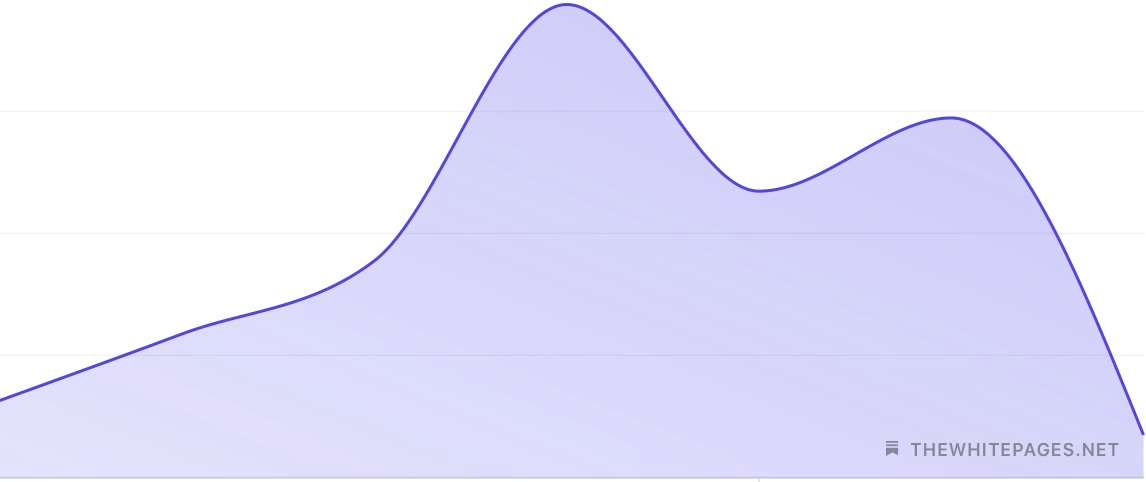
Is this a big deal? Oh goodness, no. I am doing very fine, you all. In a world full of great need, I am currently able to live my literal dream, very much thanks to you all. But, when I say “now is particularly a useful time for new subscribers to jump on and take a relay shift in keeping The White Pages running,” that’s what I mean. It’s nice to have a guarantee that, when all is said and done, my income will be steady year-in, year-out. And yes, I’ll give you free merch as a thank you, like potlucks hats and that shirt with the jaunty heart on it who hates fascism (yesterday, two readers in North Carolina met each other because they both wore their shirts to an anti-ICE training— hey, you two!). And yes, I’ll always have notes like this at the bottom of essays, even though I know they’re probably annoying, but I promise NOT to have ads or weird stuff like that. Trade-offs!
Oh, and if you don’t have money to spare, that’s ok. Sharing helps too! Or just being here, honestly. Or tossing me an email, and understanding that I love it even if it takes me months to reply sometime. Or coming and saying hi in Portland. In every case, I appreciate you.
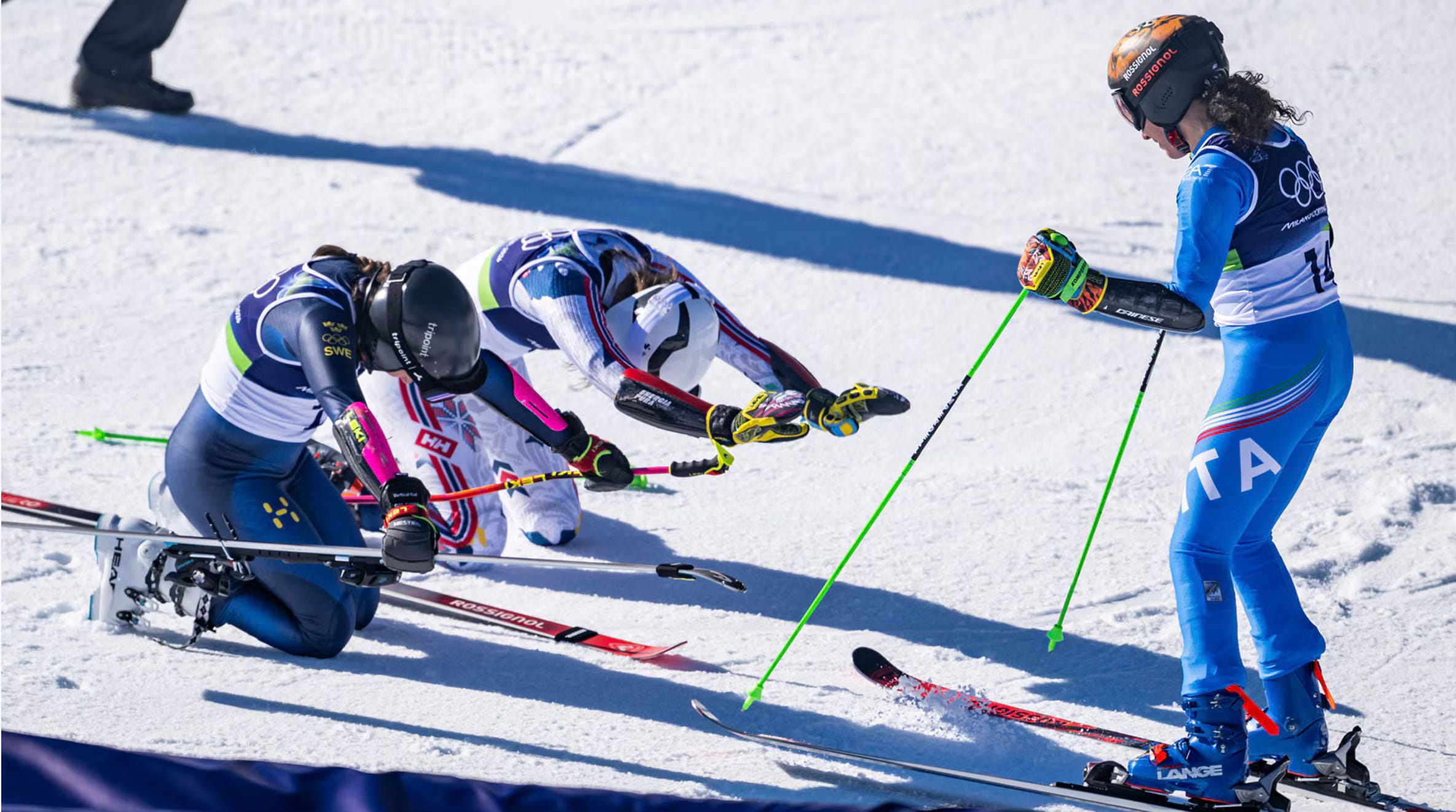
This has been a particularly loose end notes, so here’s one more Olympic picture. This is from the giant slalom. Going into the final skier, Federica Brignone of Italy, Sweden’s Sara Hector and Norway’s Thea Louise Stjernesund were tied for gold. Then, Brignone, who incidentally has a super rad tiger painted on her helmet, swooped down the mountain and barely bested them. It was quite the performance, and though I didn’t understand one lick about what made it great, Stjernesund and Hector did, which is why they immediately ran over to Brignone and did a really adorable “we’re not worthy” bow.
We can’t help but celebrate each other, you all. We just can’t help it.
I never imagined I would be so struck by the death of Jesse Jackson, but I am. That thing they said in his NYT obituary about him being the bridge between King and Obama hit me right in the gut. I feel my own life existing, generationally, on that bridge between the mid-20th century civil rights movements and whatever is going to emerge, is emerging probably even now, in this second quarter of the twenty-first. Growing up in D.C., I remember being around some of the greatest of that era-- Jackson, Bernice Johnson Reagan, even Marion Barry before he got caught up in crack. I remember seeing Bishop Tutu speak. Watching him walk past me and feeling the force of his light, shining.
And now they're all gone and it's hard to convey their weightiness, or what it meant to be alive and awake in a world they shared and molded with such dedication and moral clarity. I think of my own parents, both of whom were involved in movement and of an age with Jackson. How deeply imperfect they were, and also how noble and inspiring. Maybe humans are always that way, but being so intimately tied to that generation, being raised up by them, that combination of incredible nobility and human imperfection feels deeply poignant today.
Ten months ago Brignone crashed on a slalom run; she suffered catastrophic injuries to her leg. It was a long time before she could even walk & she's on record as being joyfully grateful that she even made it to these Olympics. Hector & Stjernesund (as I understand it) planned to bow to her just because she completed the run. But, as it turned out, they were acknowledging the amazing accomplishment. You talk about yer Olympic ideals...